Jakob Schröder · 7 October 2026
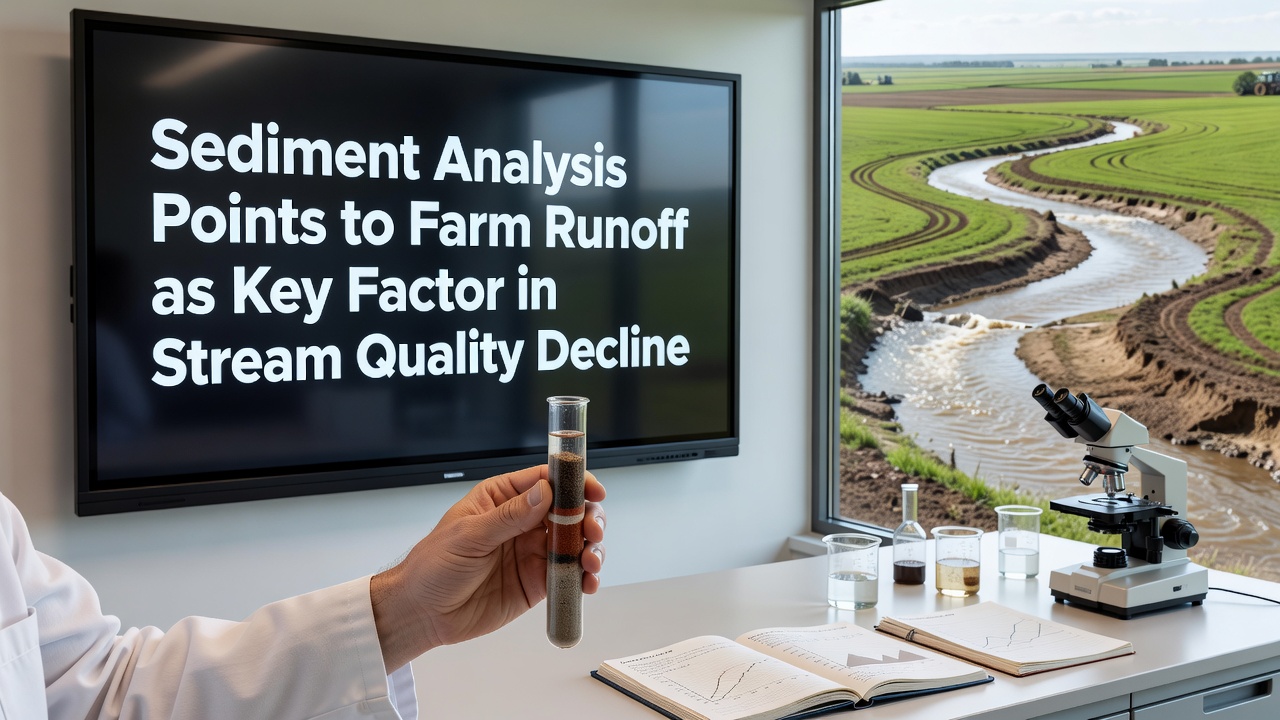
Sediment Analysis Points to Farm Runoff as Key Factor in Stream Quality Decline
Sediment analysis has emerged as a critical tool for tracking how agricultural practices influence water systems, and recent data continue to highlight farm runoff as a primary driver behind declining stream conditions. Researchers collect core samples from stream beds and analyze particle composition, nutrient loads, and pollutant markers to establish direct connections between upstream farming activities and downstream degradation. These methods reveal layers of accumulated silt that carry elevated levels of nitrogen, phosphorus, and fine soil particles originating from fertilized fields and tilled land. Studies conducted across multiple watersheds show consistent patterns where sediment layers thicken in areas adjacent to intensive crop production, correlating with measurable drops in dissolved oxygen and increases in turbidity. In October 2026, a multi-year monitoring project wrapped up in several mid-latitude river basins, confirming that agricultural runoff contributes over 60 percent of the total sediment volume entering local streams during peak growing seasons. Analysts used isotopic tracing techniques to match specific soil signatures from farm plots with deposits found in channel beds, eliminating other potential sources such as urban construction or natural erosion. The findings align with earlier reports from government agencies that track nonpoint source pollution across large regions. One key observation involved seasonal spikes in sediment accumulation right after heavy rainfall events, when runoff carries loose topsoil directly into waterways without sufficient buffer zones to intercept it.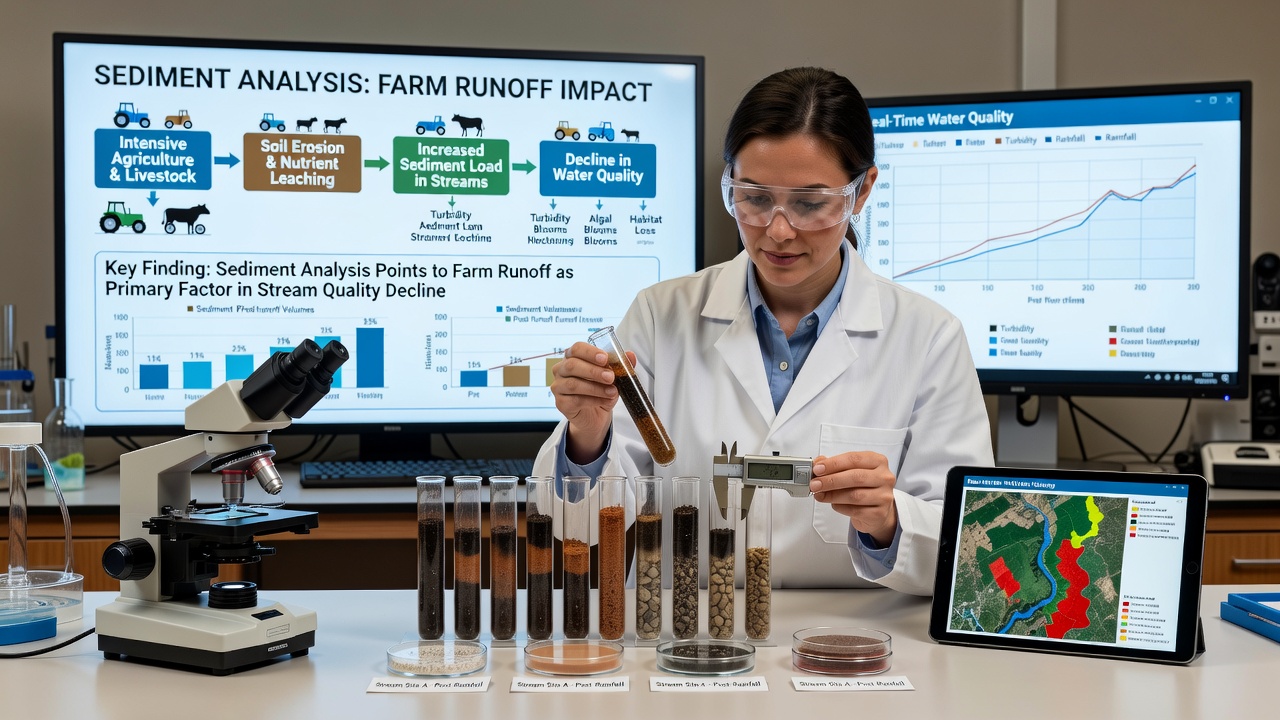
Sediment analysis has emerged as a critical tool for tracking how agricultural practices influence water systems, and recent data continue to highlight farm runoff as a primary driver behind declining stream conditions. Researchers collect core samples from stream beds and analyze particle composition, nutrient loads, and pollutant markers to establish direct connections between upstream farming activities and downstream degradation. These methods reveal layers of accumulated silt that carry elevated levels of nitrogen, phosphorus, and fine soil particles originating from fertilized fields and tilled land. Studies conducted across multiple watersheds show consistent patterns where sediment layers thicken in areas adjacent to intensive crop production, correlating with measurable drops in dissolved oxygen and increases in turbidity. In October 2026, a multi-year monitoring project wrapped up in several mid-latitude river basins, confirming that agricultural runoff contributes over 60 percent of the total sediment volume entering local streams during peak growing seasons. Analysts used isotopic tracing techniques to match specific soil signatures from farm plots with deposits found in channel beds, eliminating other potential sources such as urban construction or natural erosion. The findings align with earlier reports from government agencies that track nonpoint source pollution across large regions. One key observation involved seasonal spikes in sediment accumulation right after heavy rainfall events, when runoff carries loose topsoil directly into waterways without sufficient buffer zones to intercept it.Tracing Sediment Sources Through Laboratory Methods
Laboratory protocols for sediment analysis typically begin with grain-size distribution tests, followed by chemical assays that quantify attached nutrients and trace elements. Scientists often employ X-ray fluorescence to identify mineral profiles unique to particular soil types, then cross-reference those profiles against surrounding land-use maps. This approach allows precise attribution of sediment loads to specific farm fields rather than generalized landscape features. Data compiled over successive years indicate that conventional tillage practices accelerate erosion rates by exposing bare soil to wind and water, whereas no-till systems show measurably lower contributions to streambed buildup. Researchers also examine organic matter content within sediment cores, noting higher percentages of fertilizer-derived compounds in samples taken downstream from livestock operations. What's interesting is how these analyses extend beyond basic chemistry to include biological indicators. Benthic macroinvertebrate surveys conducted alongside sediment sampling demonstrate reduced diversity in reaches where fine particles dominate the substrate, because the silt smothers gravel beds that many aquatic species require for spawning and feeding. Figures from long-term monitoring networks reveal that streams with sediment loads exceeding 50 milligrams per liter experience consistent declines in sensitive insect taxa, shifting community structures toward more tolerant organisms.Impacts Documented Across Varied Watersheds
Stream quality metrics affected by farm runoff include clarity, nutrient balance, and habitat suitability. When sediment loads rise, light penetration decreases, limiting photosynthesis by aquatic plants and algae that form the base of the food web. Phosphorus bound to sediment particles becomes available for uptake once it settles in slower-moving sections, fueling algal blooms that further deplete oxygen during decomposition. Observers note that these effects compound during warmer months, when lower flows concentrate pollutants and raise water temperatures simultaneously. One study revealed that targeted buffer strip installations along field edges reduced sediment delivery by nearly 40 percent in test watersheds, yet adoption rates remain uneven across different agricultural regions. Government data from the United States Environmental Protection Agency document similar patterns in the Midwest, where corn and soybean rotations coincide with elevated stream sediment levels. Agricultural sources contribute the majority of nutrients and sediment in many monitored basins, according to national inventories that aggregate state-level reports.